The Pencil Remains: In Memory of Norio Shioyama
Dead Rising is a beloved open-world survival horror franchise. For the promotional campaign accompanying its second installment, Capcom sought an approach that broke entirely from convention. Director Manabu Gaku Inada proposed an animated film that would transpose the story from the present day to feudal Japan —"Samurai Dead Rising"—a concept that, in retrospect, presaged the multiverse narratives that would later define mainstream entertainment.
Dead Rising is a beloved open-world survival horror franchise. For the promotional campaign accompanying its second installment, Capcom sought an approach that broke entirely from convention. Director Manabu Gaku Inada proposed an animated film that would transpose the story from the present day to feudal Japan —"Samurai Dead Rising"—a concept that, in retrospect, presaged the multiverse narratives that would later define mainstream entertainment.
Inada took on an expansive role across the project: director, producer, and composer, working fluidly across disciplines. For the animation, he turned to a trusted friend in the industry, Umezaki, who put forward a name that carried considerable weight: Norio Shioyama — a living legend with over fifty years of experience, whose work on Armored Trooper Votoms and Samurai Trooper had made him one of the most revered and formidable figures in Japanese animation.
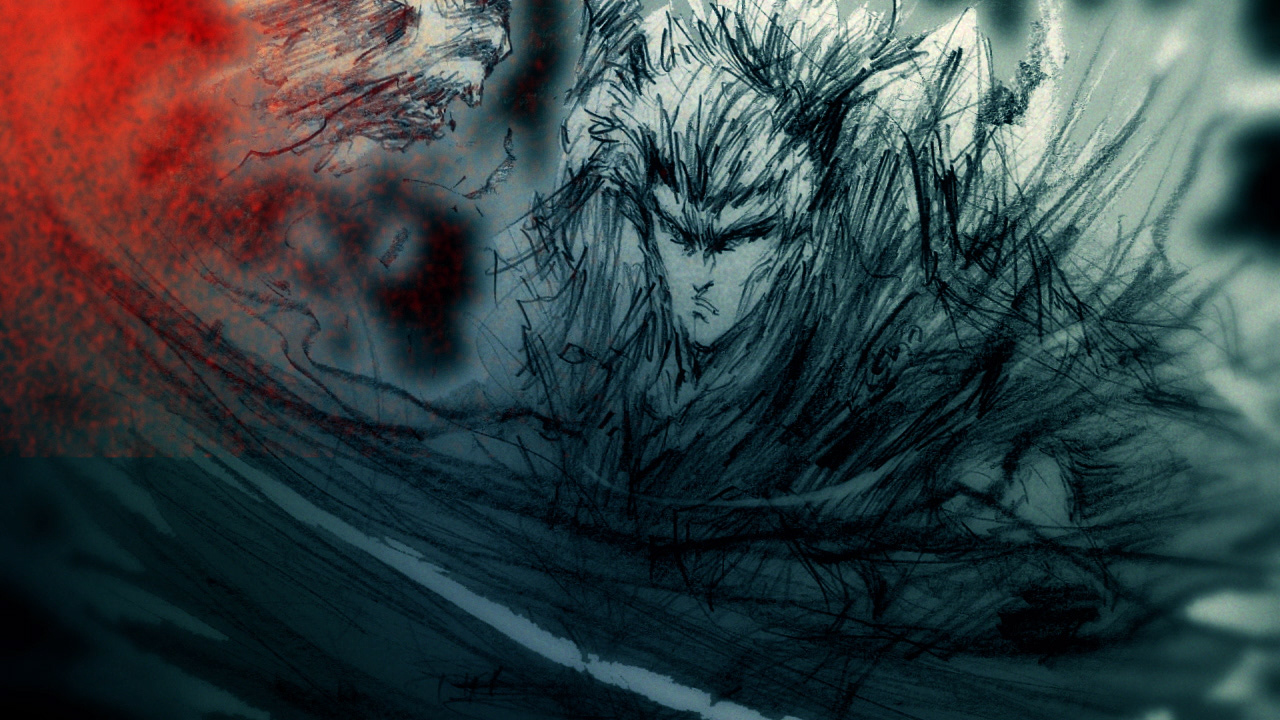
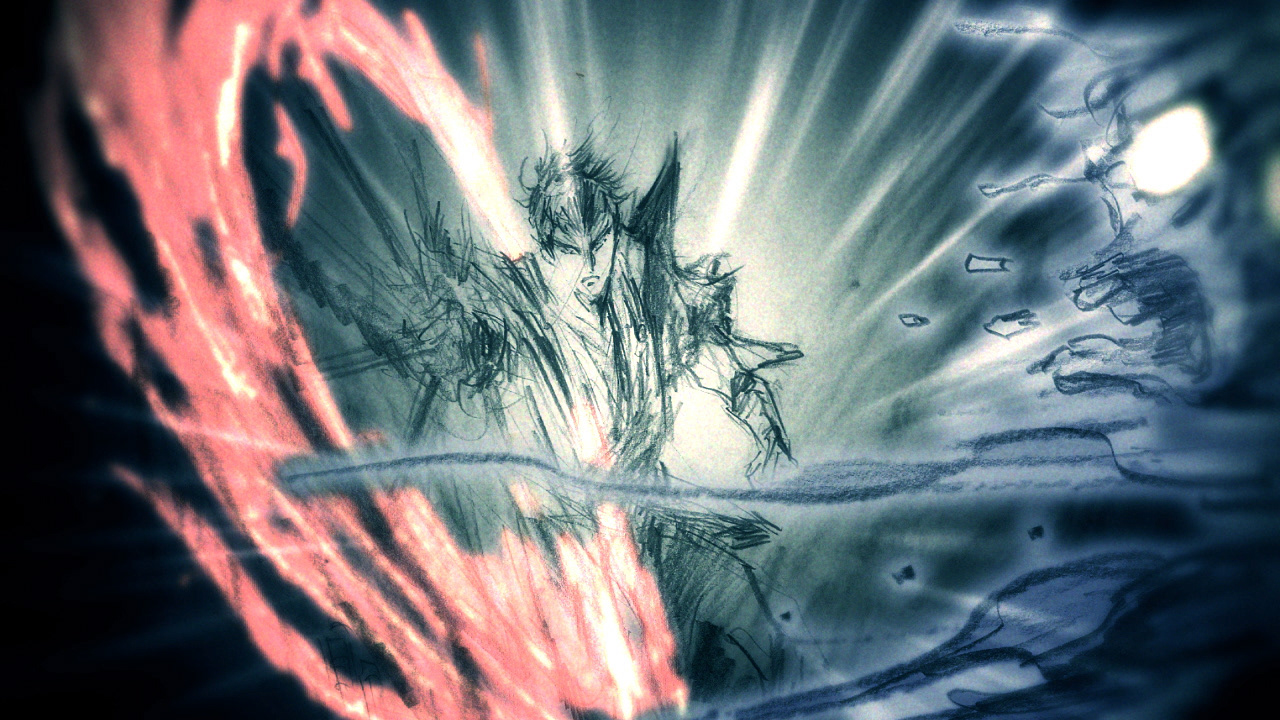
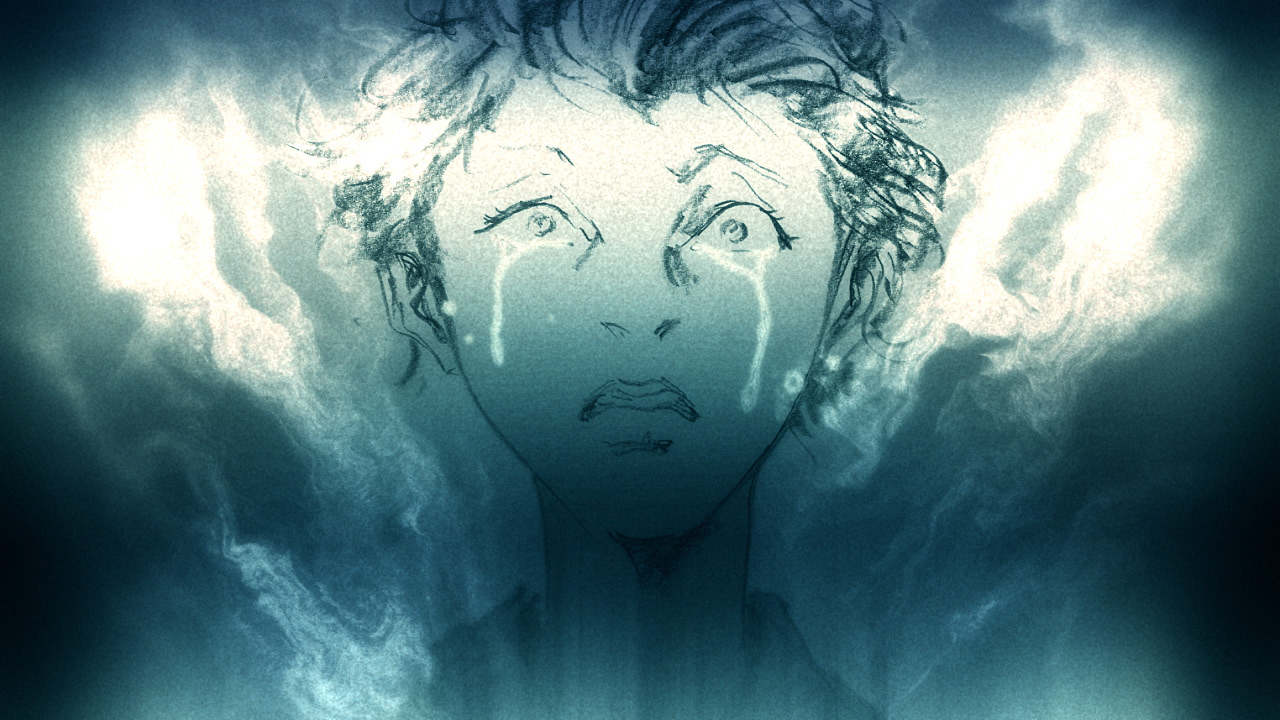
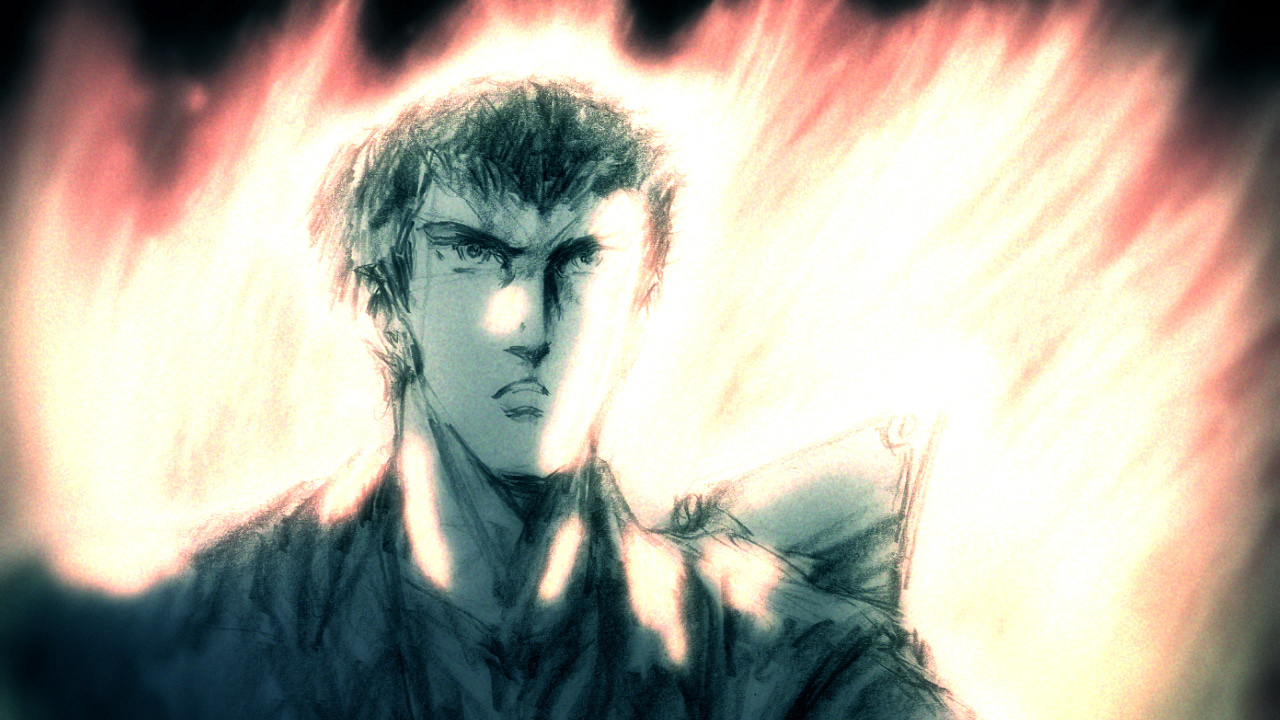
When Inada, a New York-based creative artist, visited Shioyama's studio in Tokyo for the first time, the two men — separated by generation, experience, and geography — found an immediate and unexpected rapport. Working from Inada's early character designs and storyboards, Shioyama produced drawings of remarkable characters: bold, rough-hewn, and deeply artistic, rendered entirely in pencil. A rough cut was assembled by compositors in Tokyo before the footage was sent to Inada's studio in New York for further refinement and editing.
The score was equally personal. Watching the footage, Inada improvised bass lines on the spot — experimental, noise-inflected, with an undercurrent of Japanese sensibility — which New York-based music producer Shohei Narabe then shaped into a full composition. The result was something singular: a piece of music that seemed to breathe with the film's eerie, timeless world rather than simply accompany it.
This project remains one of the most memorable collaborations of my career — a rare convergence of artists across generations, disciplines, and distances, united by a shared vision.
After the project wrapped, Shioyama and I stayed in touch, exchanging messages between Tokyo and New York, making plans to work together again. A few years later, he was taken from us suddenly, in an accident. The loss stays with me still.
Client: Capcom
Directed / Produced / Written: Manabu Gaku Inada
Animation director: Norio Shioyama
Music: Shohei Narabe
Compositor: Kentaro Sasaki
Year: 2010
Directed / Produced / Written: Manabu Gaku Inada
Animation director: Norio Shioyama
Music: Shohei Narabe
Compositor: Kentaro Sasaki
Year: 2010
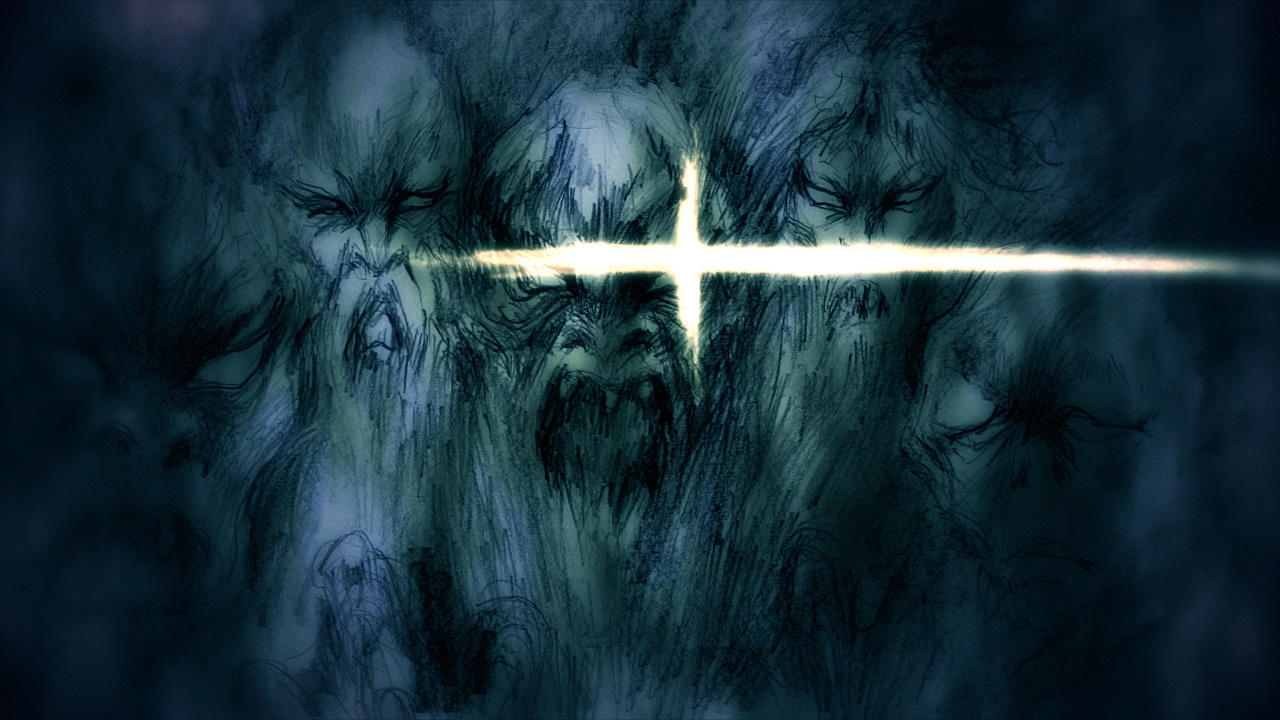
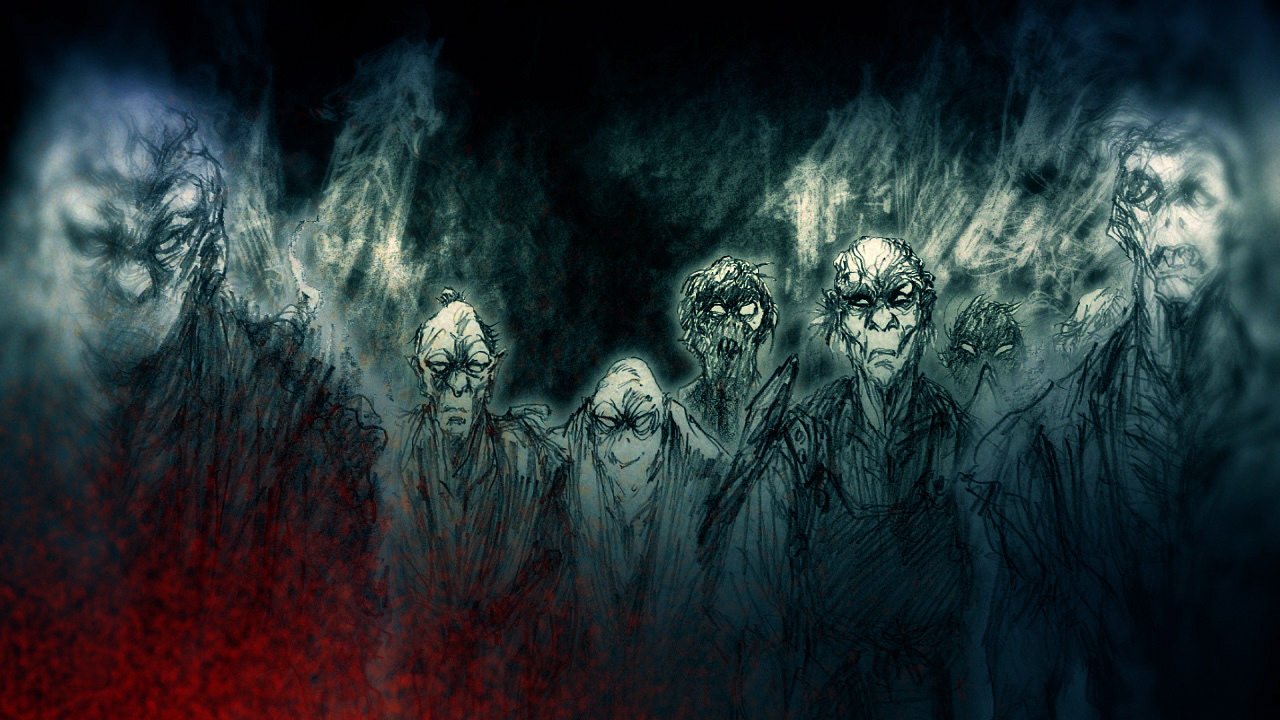

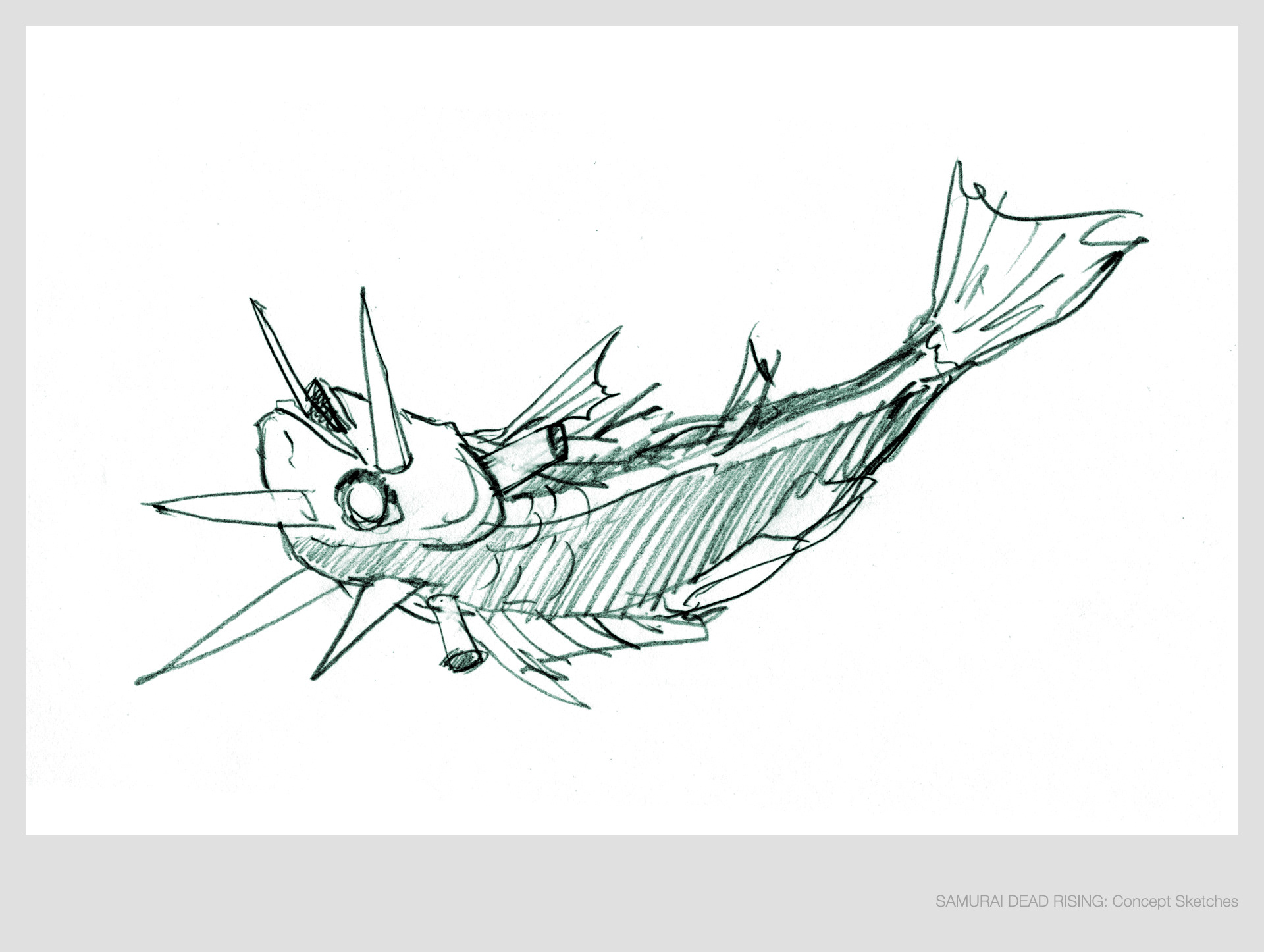
Early concept art by Manabu Gaku Inada — a preliminary crowd study featuring zombie figures.

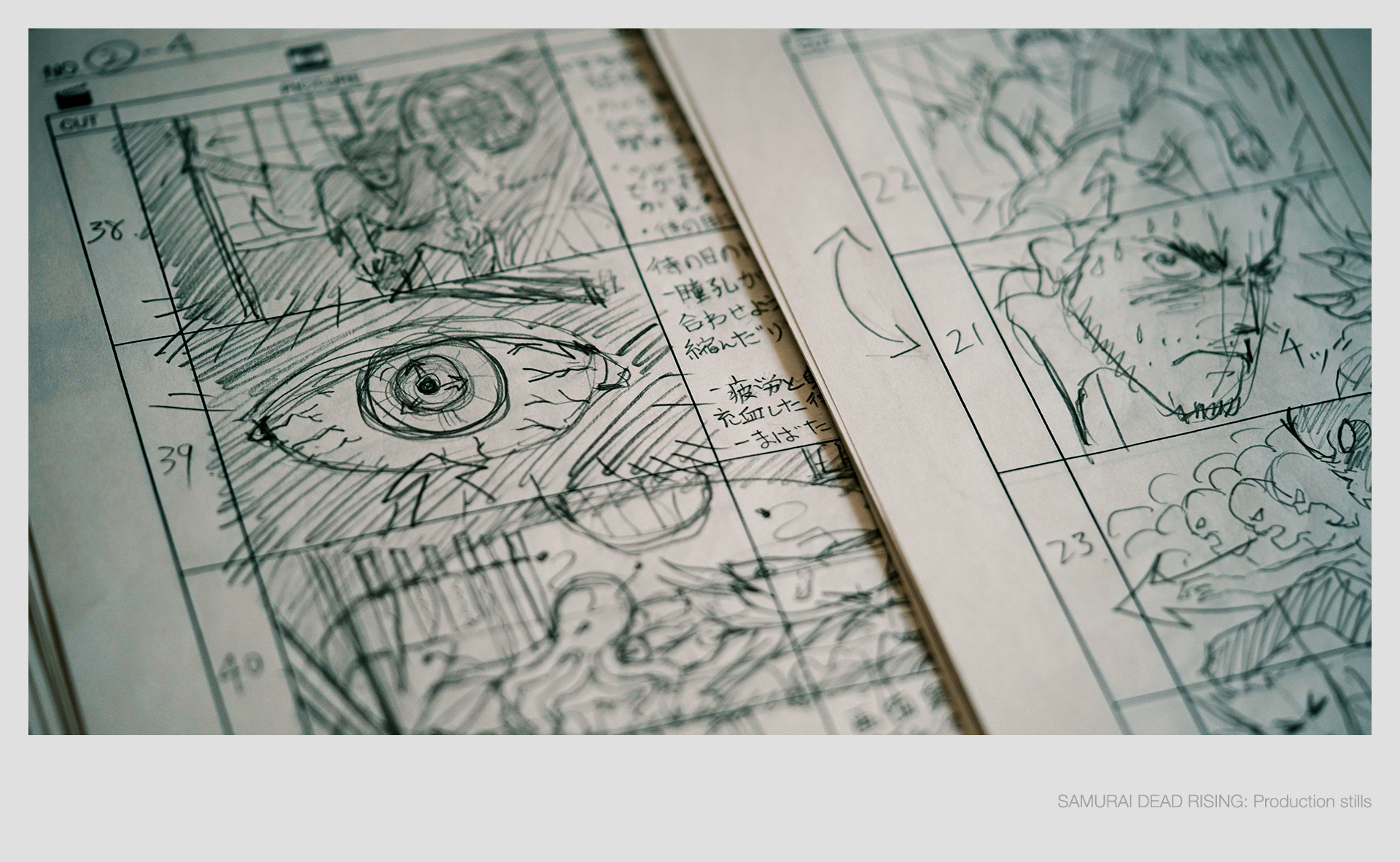
Storyboard by Manabu Gaku Inada
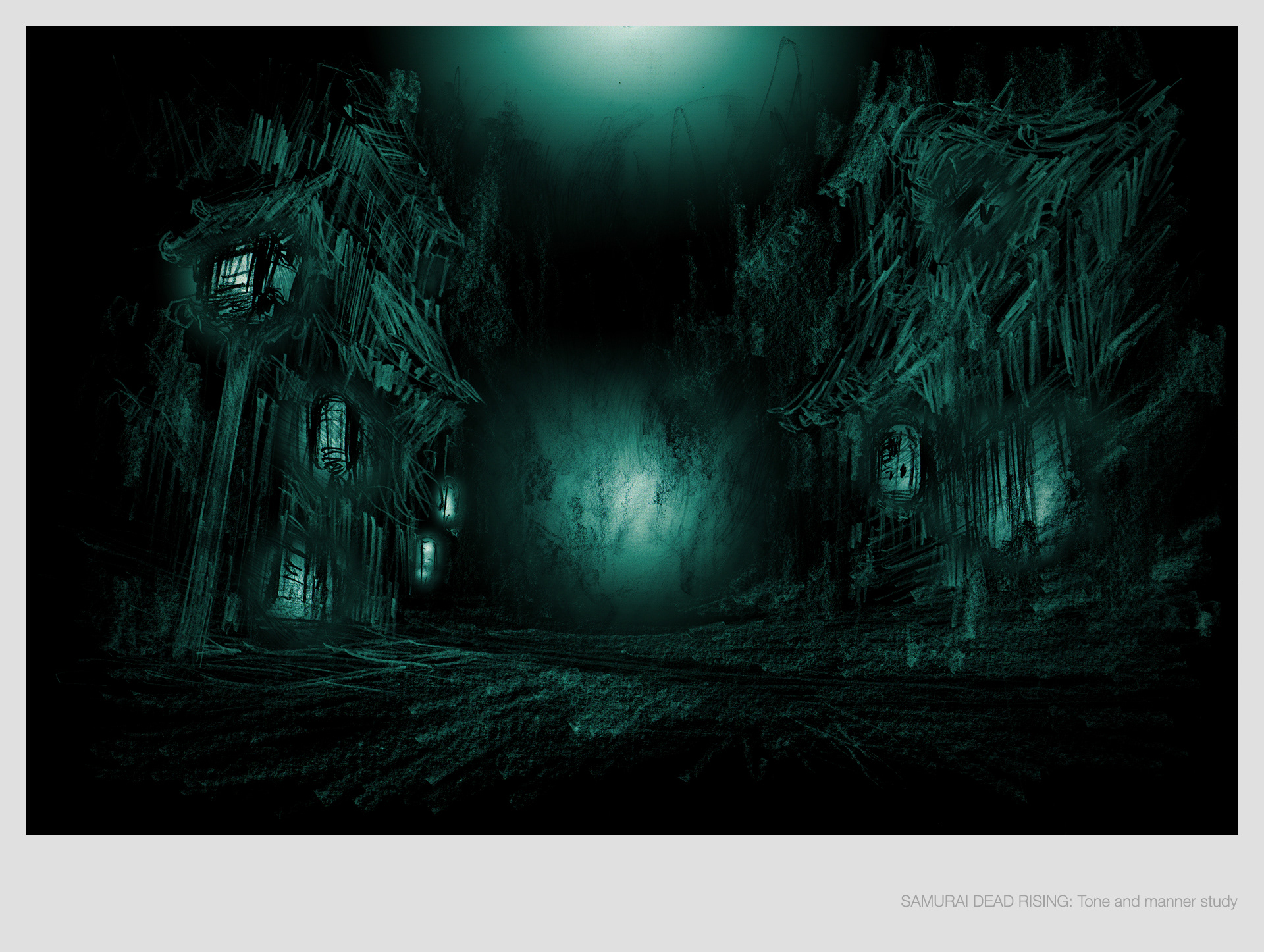
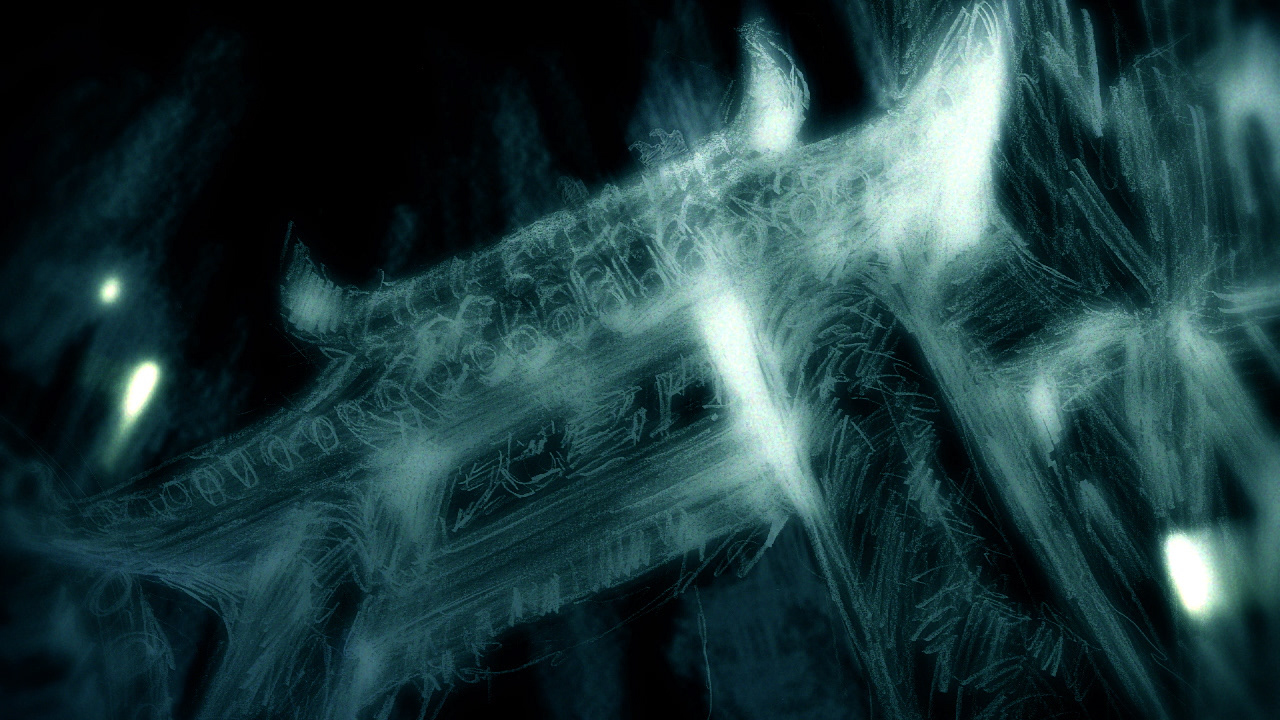
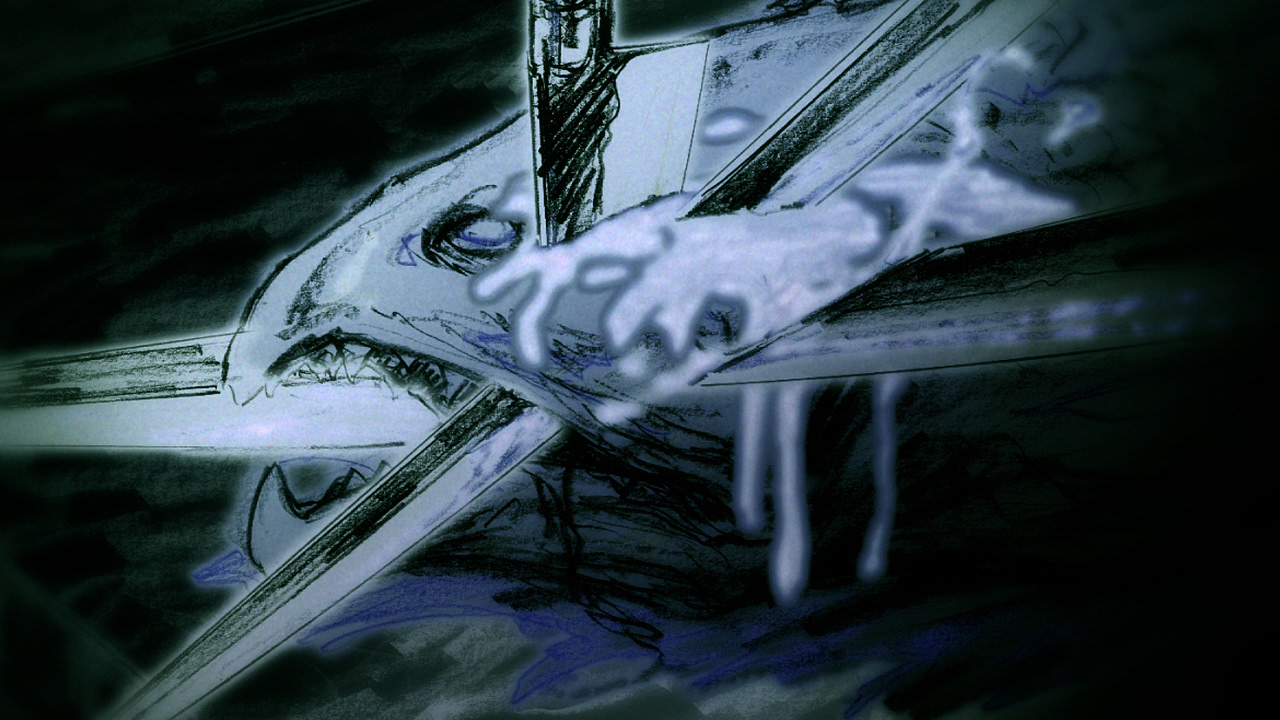
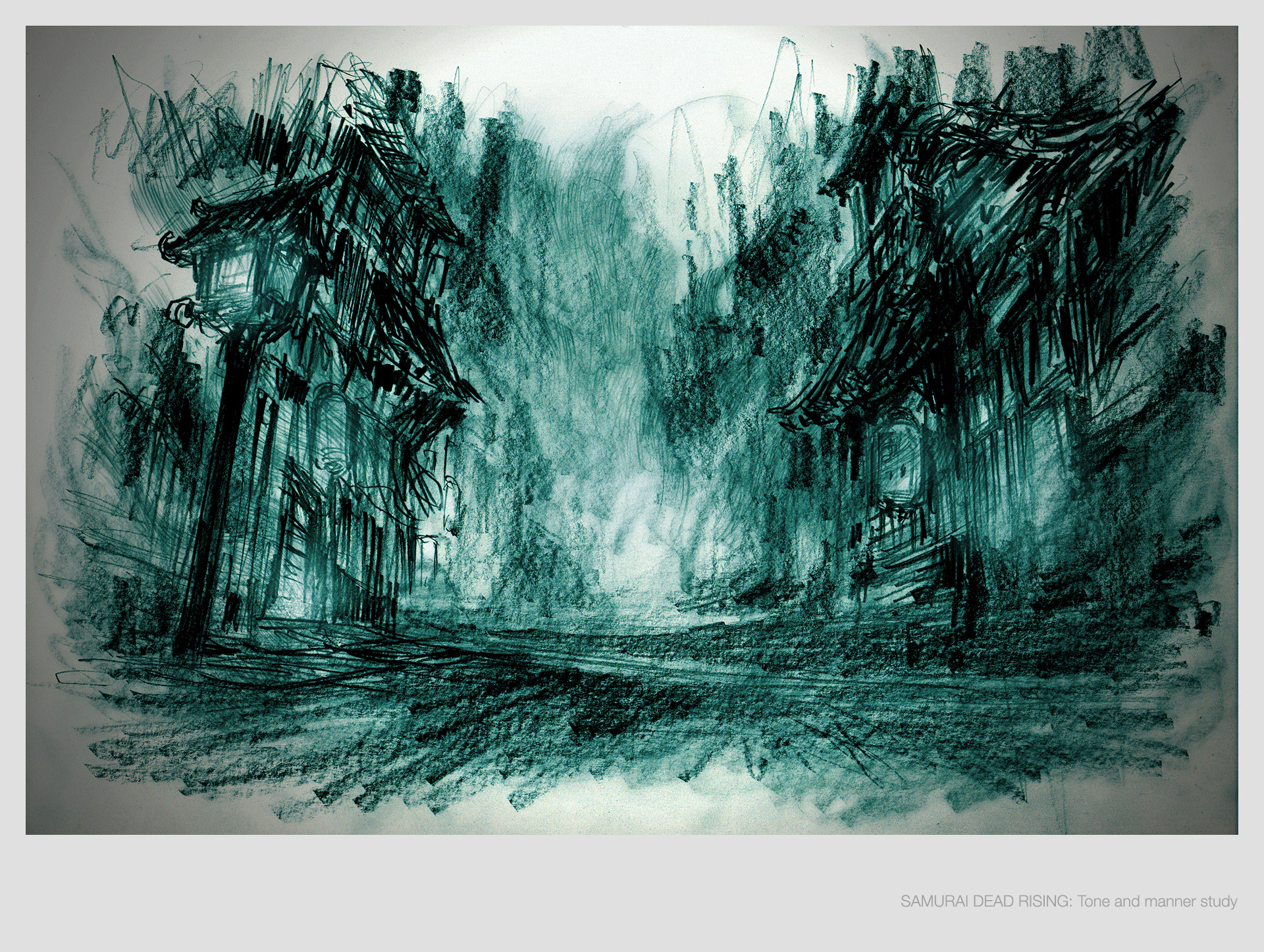
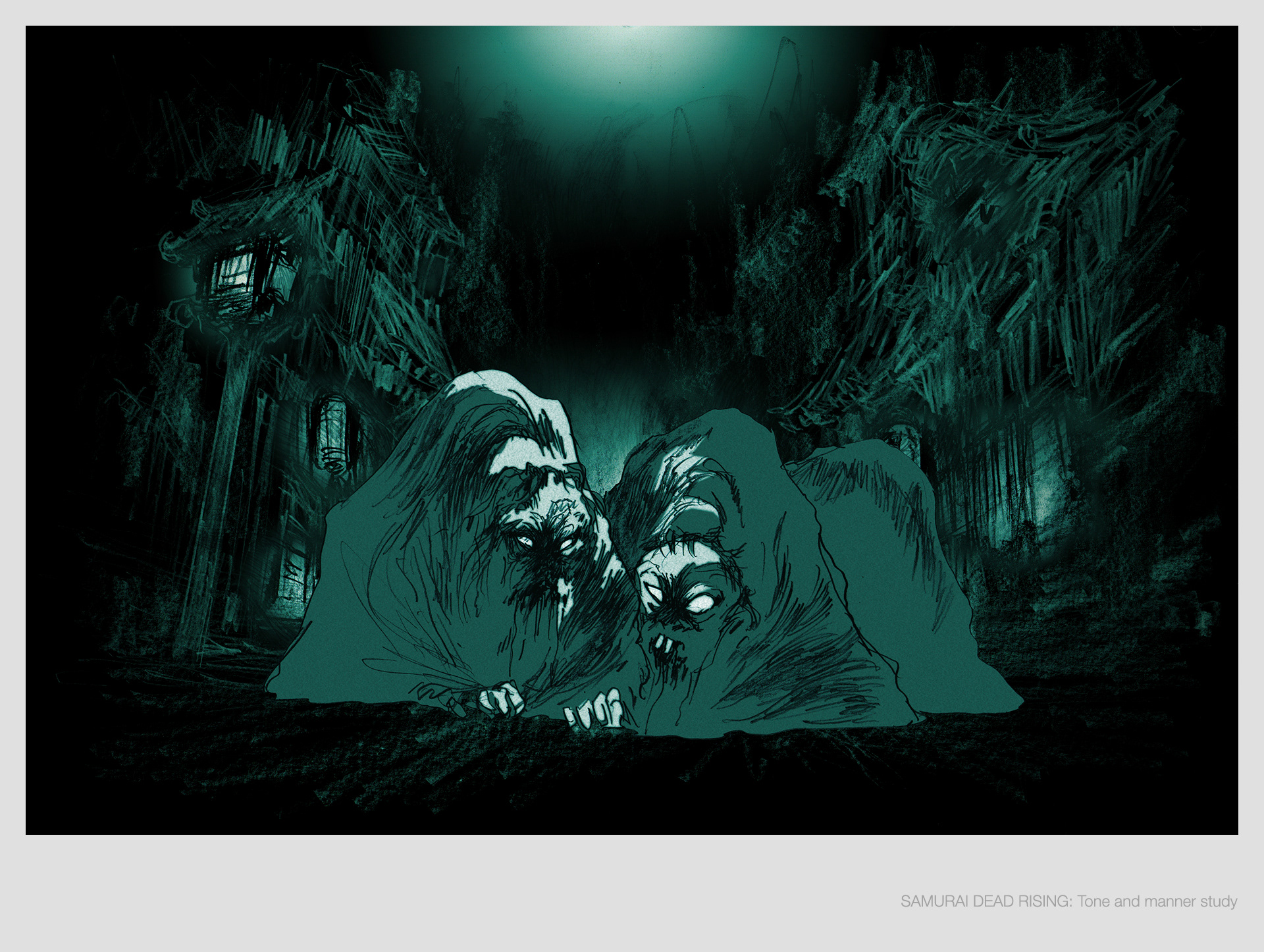
Imageboard for the background composition. Shioyama's original pencil drawing was inverted to heighten the haunted atmosphere, with art direction and color rendering by Manabu Gaku Inada.
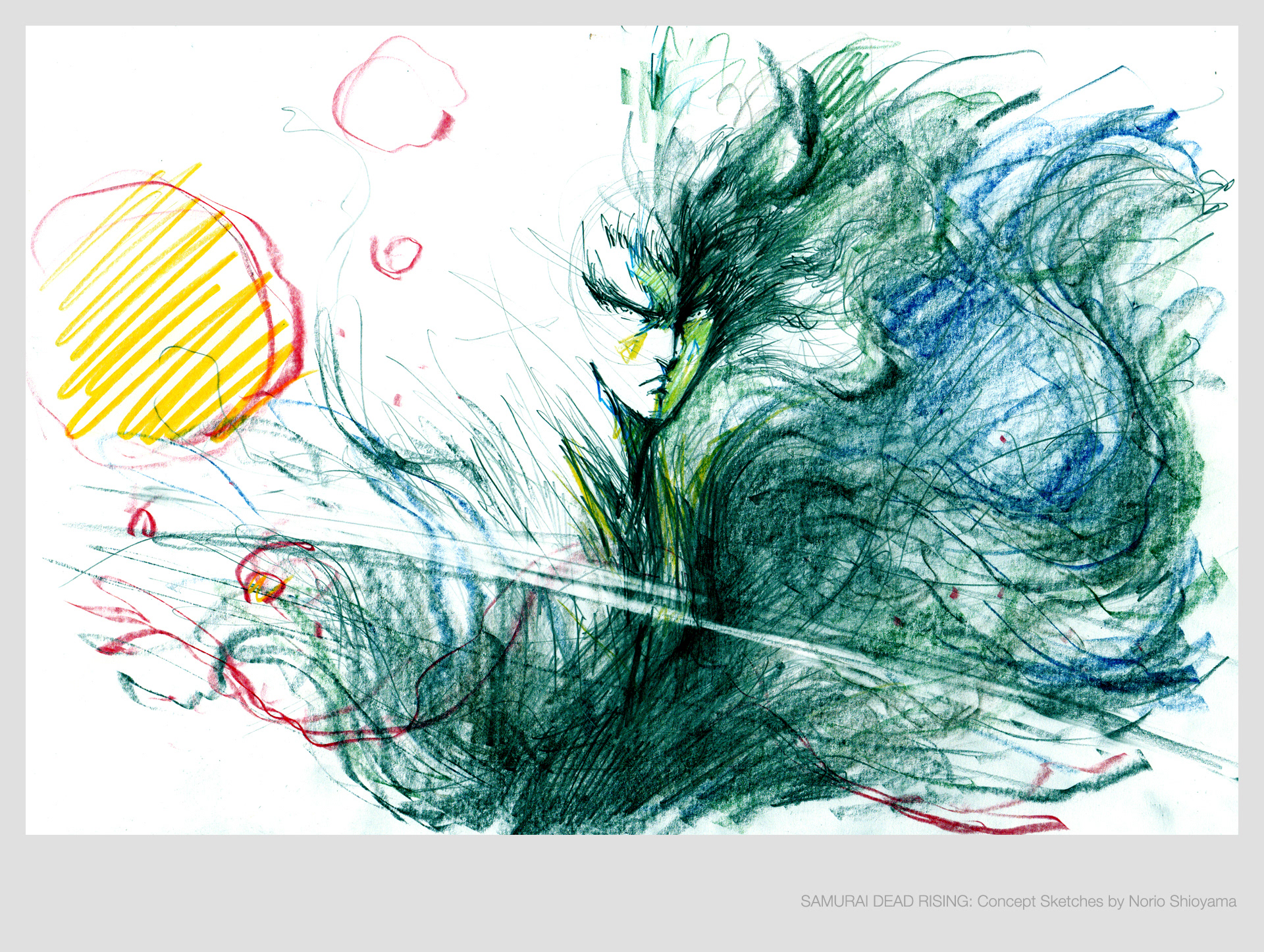
Drawing of a samurai by Norio Shioyama.

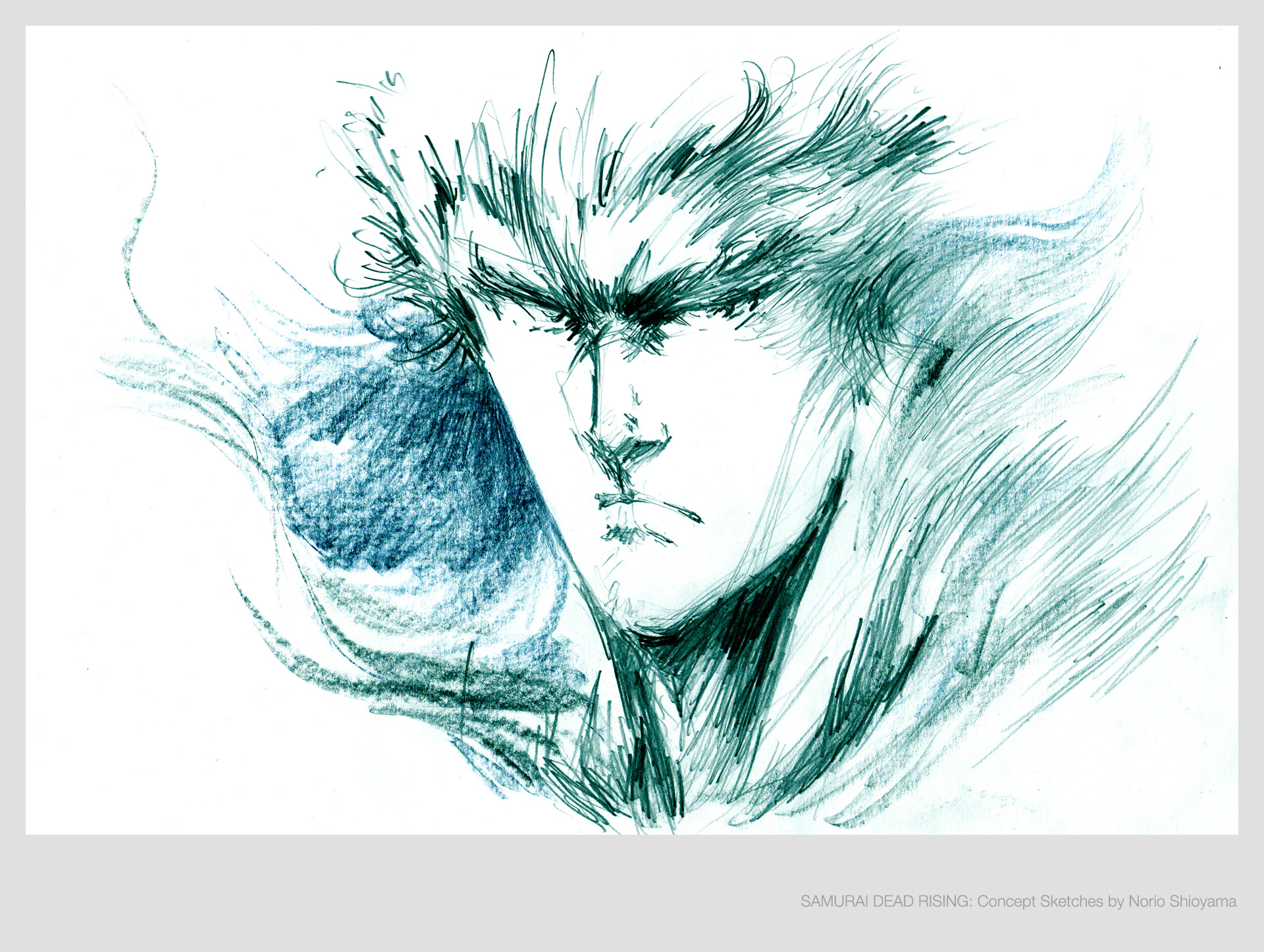

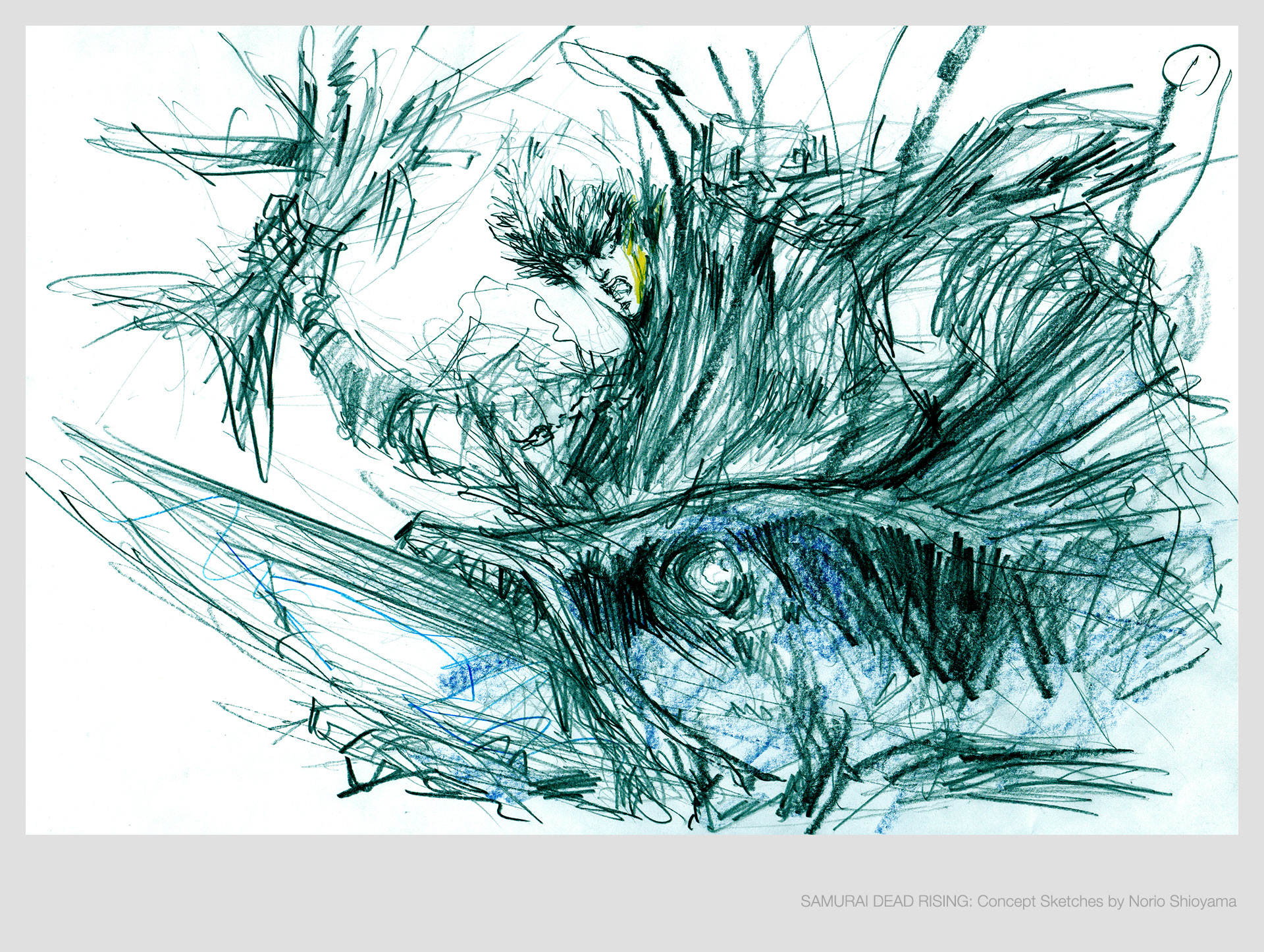
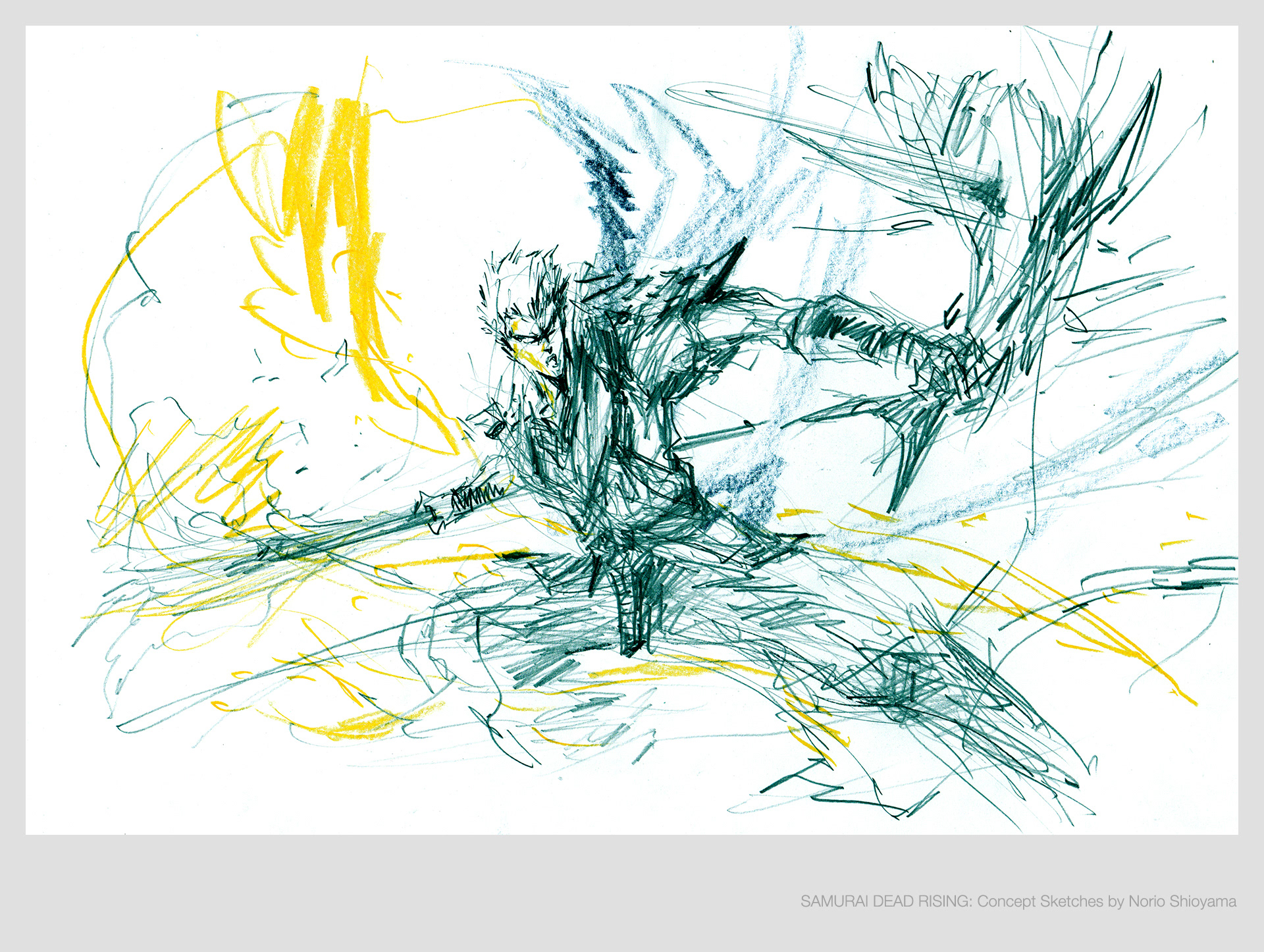
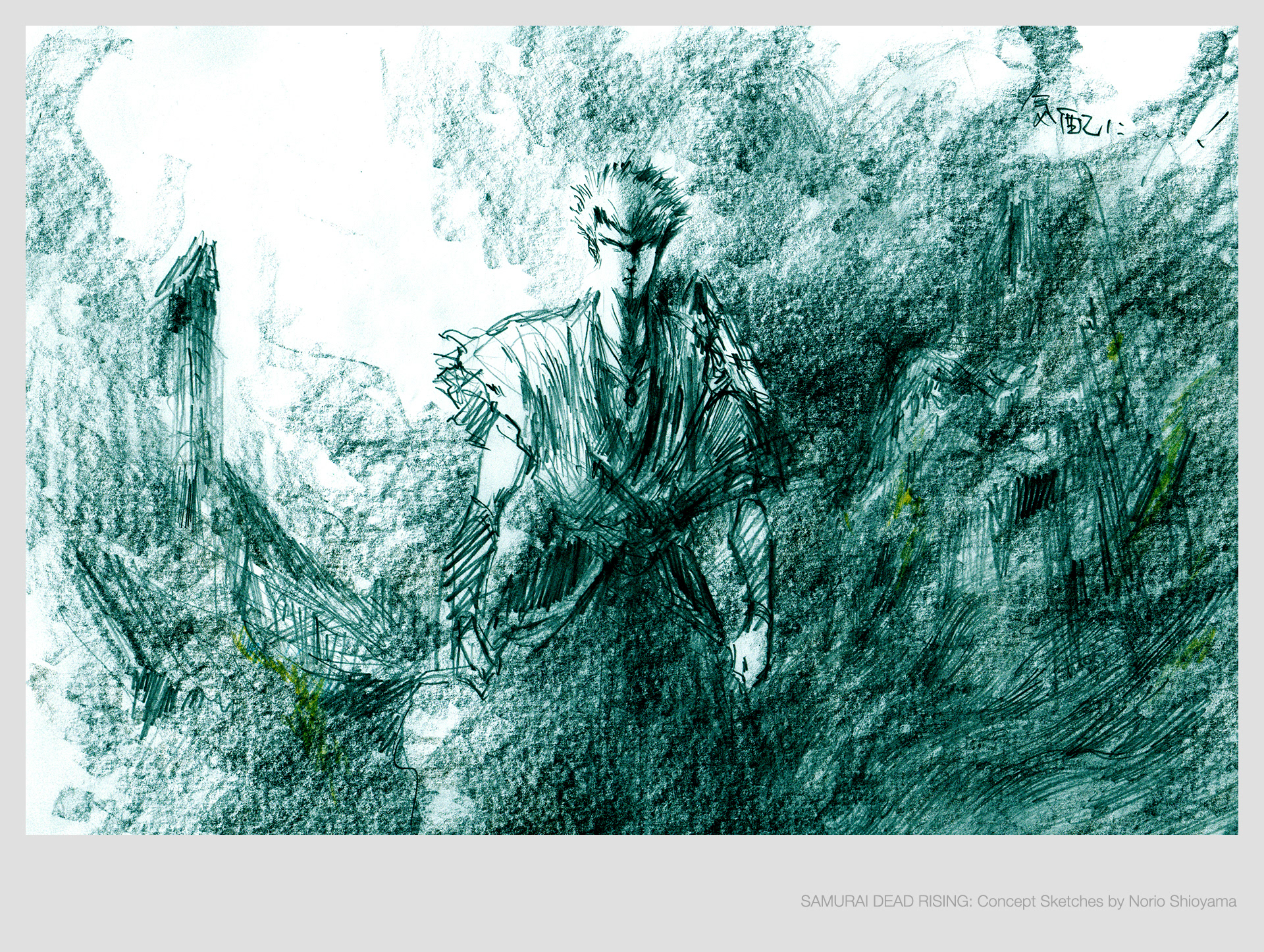
Different drawings created by Norio Shioyama.

Norio Shioyama at his Atelier
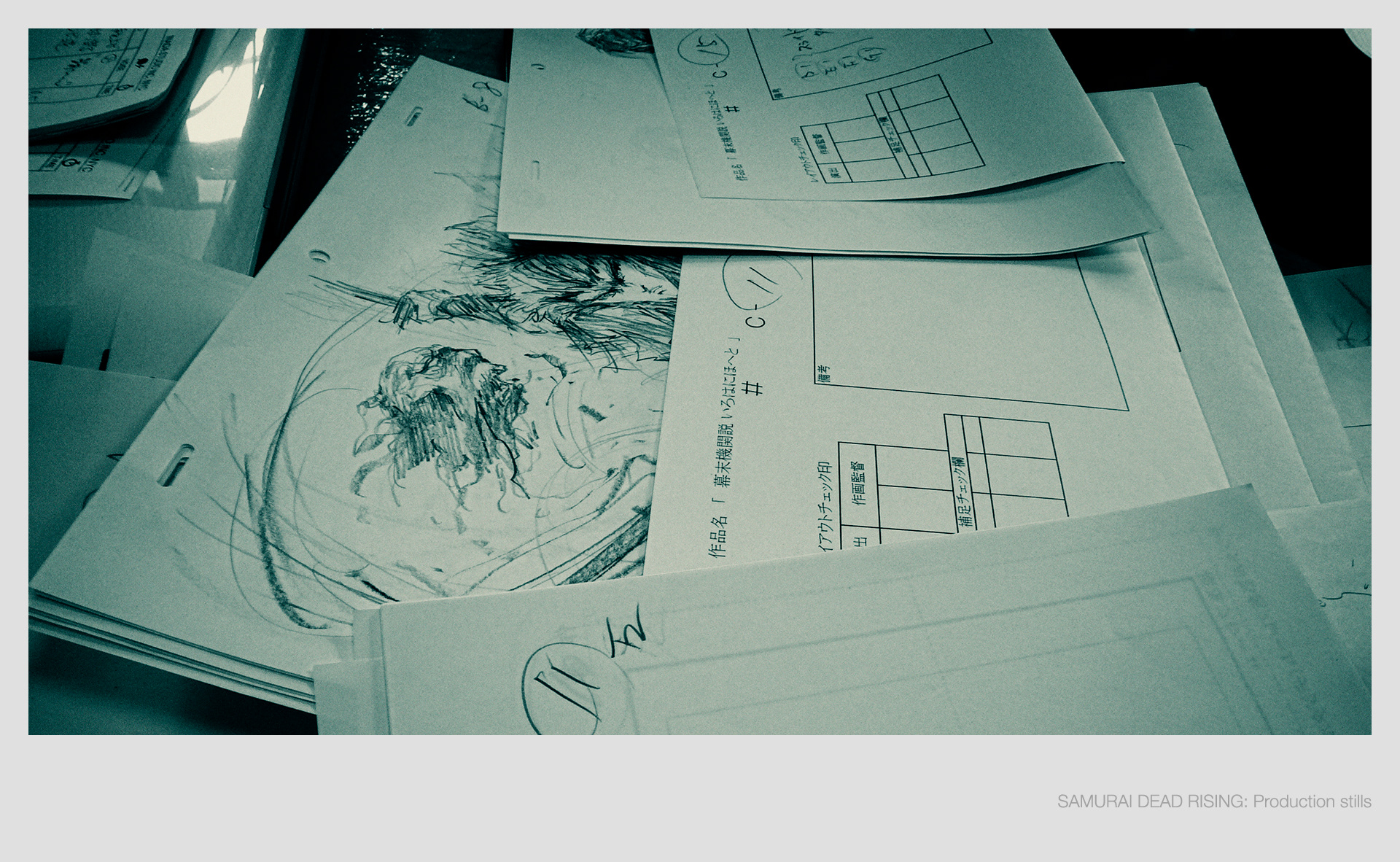
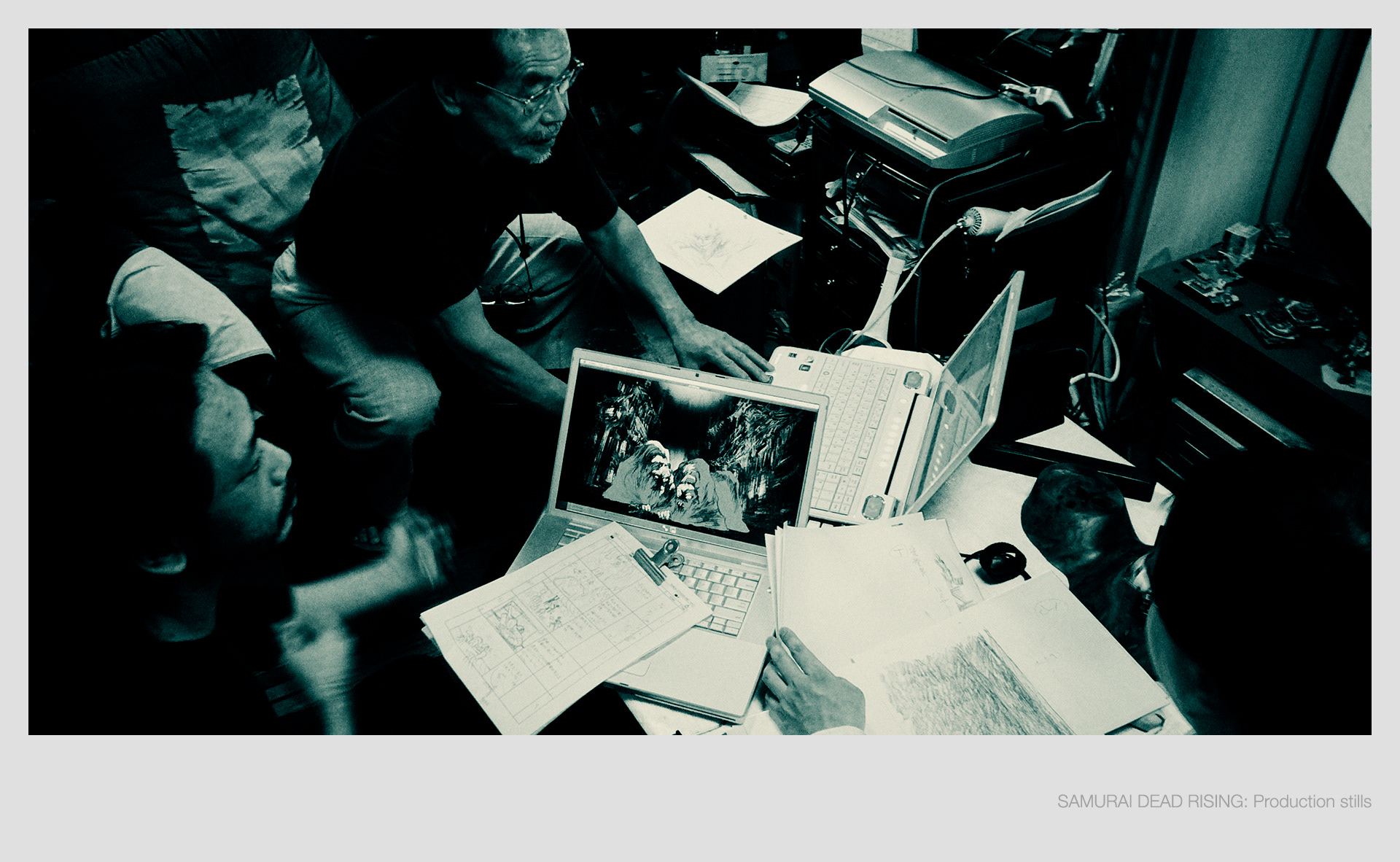
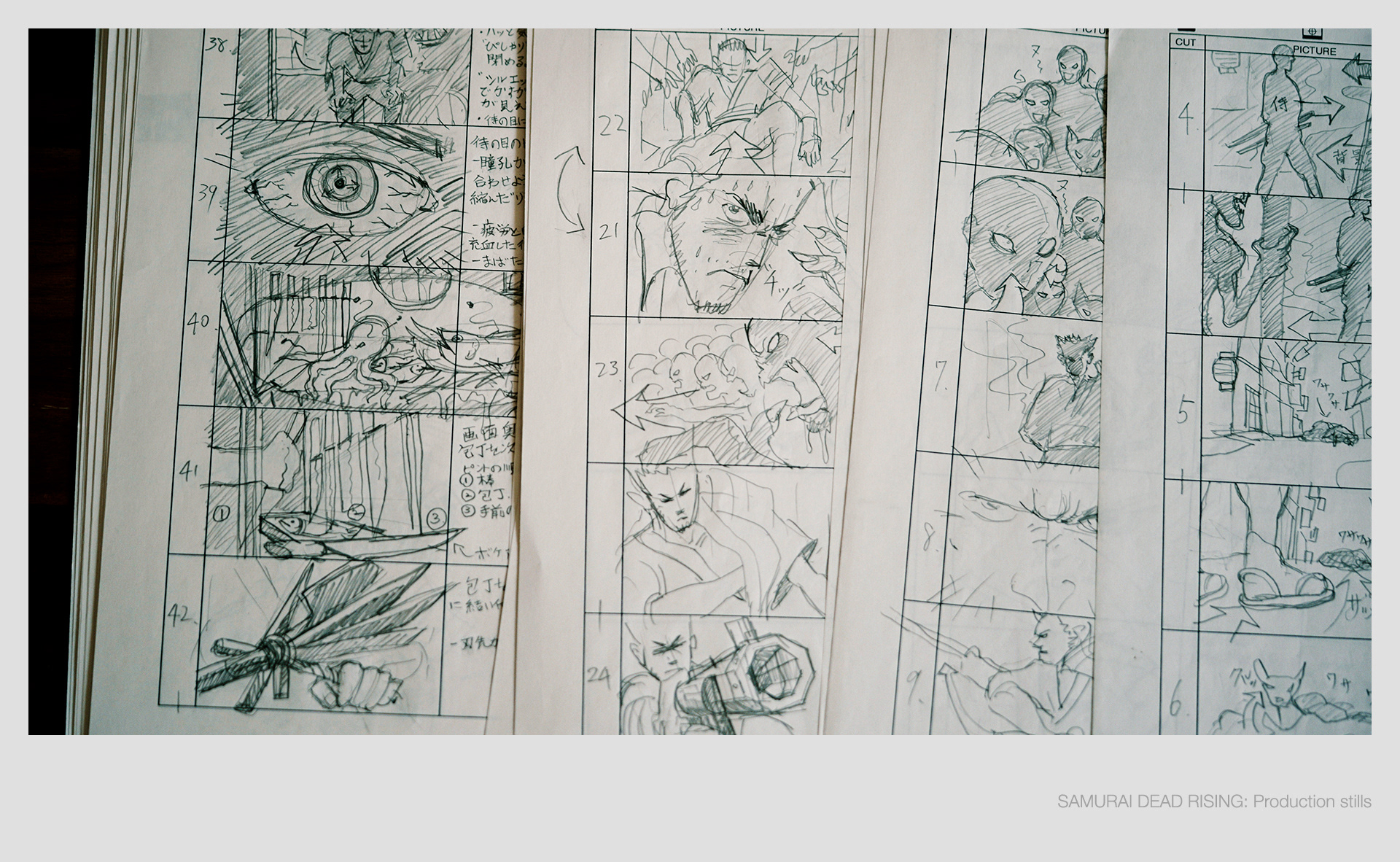
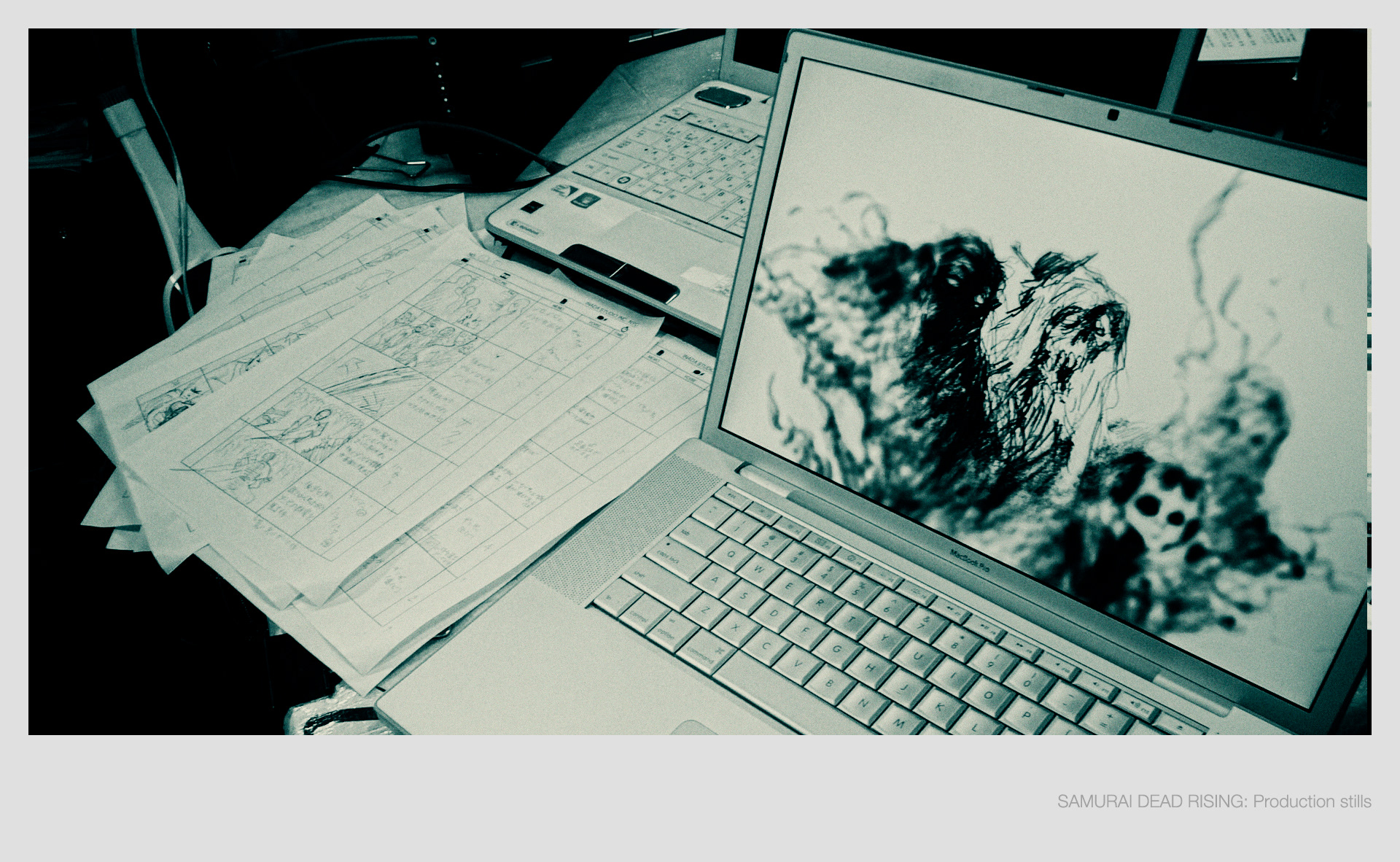
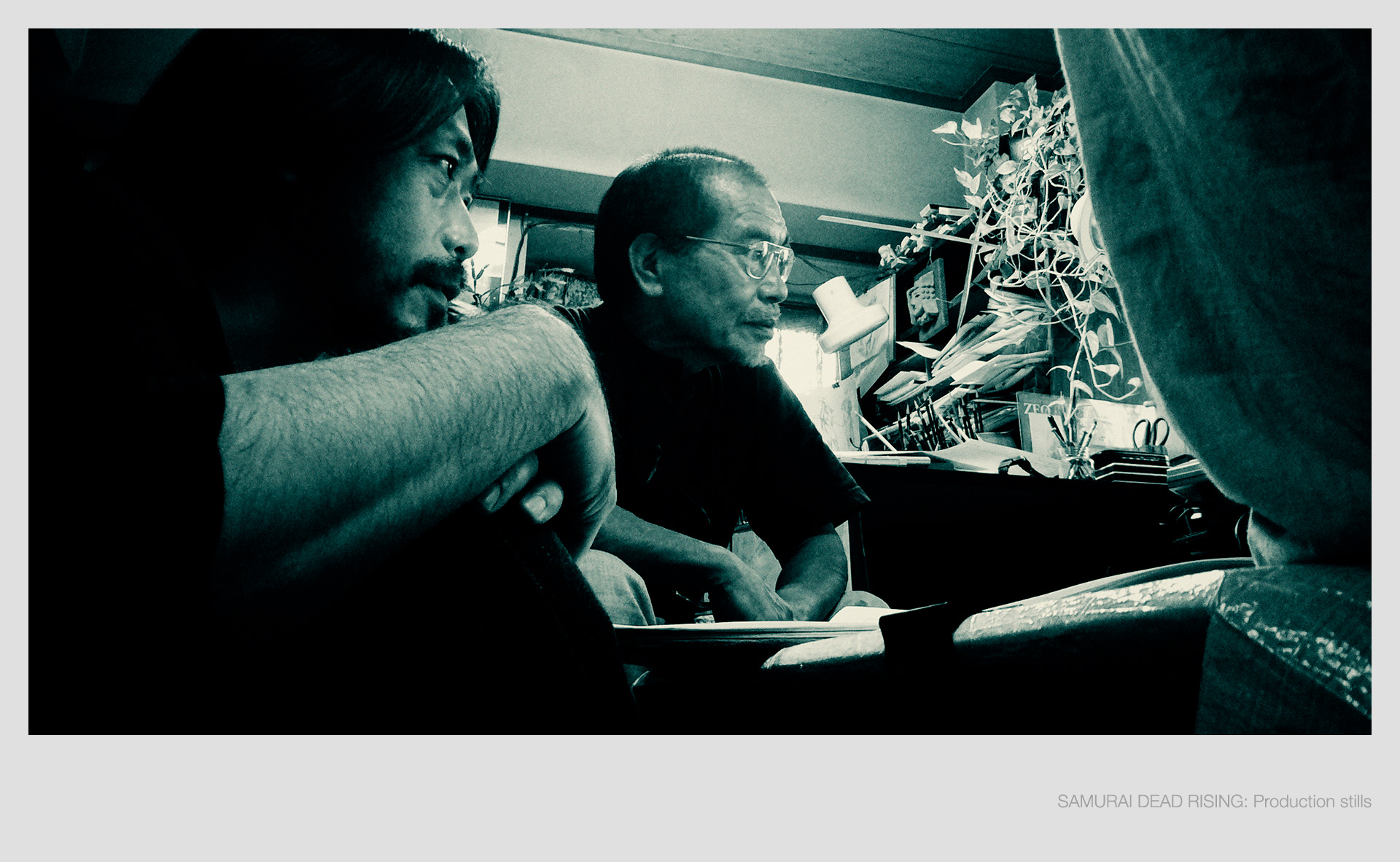
Director Inada met with Norio Shioyama at Shioyama's studio in West Tokyo in July 2010.
Title logo design by Manabu Gaku Inada

In Memory of Norio Shioyama
1940 – 2017
1940 – 2017